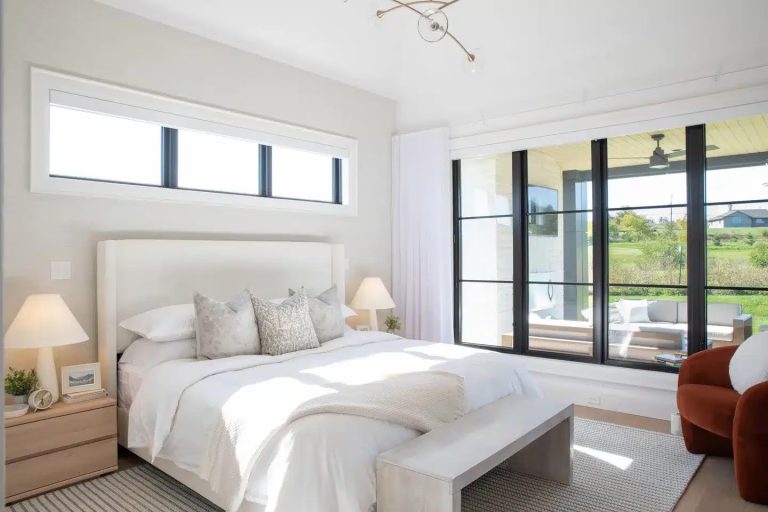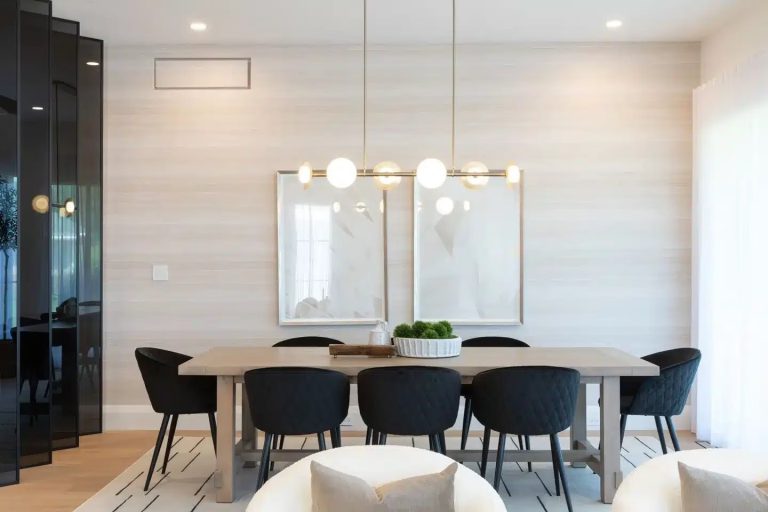
Best Window Treatments for Living Rooms
The living room is often one of the most visible spaces in a home.
Window treatments therefore need to do more than simply cover the glass.
A good living-room treatment should balance:
- natural light
- privacy
- glare
- views
- comfort
- interior design
The right solution depends heavily on the windows themselves and how the room is used throughout the day.

Start With Natural Light
Most living rooms benefit from daylight.
The goal is often to reduce uncomfortable brightness without making the room feel dark.
Good options include:
- light filtering roller shades
- solar shades
- zebra blinds
- sheer curtains
- layered treatments
If the living room receives strong direct sun, solar control may become more important.
Roller Shades
Roller shades are a practical choice for modern living rooms.
They provide a clean appearance and can be made with different fabrics.
Options may include:
- light filtering
- solar
- room darkening
When raised, they occupy relatively little visual space.
This can help preserve:
- large windows
- city views
- modern architecture
Solar Shades
Solar shades are particularly useful in rooms with strong sunlight.
They can help reduce glare, direct solar exposure and UV exposure while maintaining some outward visibility.
They work particularly well in:
- south-facing rooms
- west-facing rooms
- condos with large glass walls
- living rooms with televisions
Zebra Blinds
Zebra blinds provide adjustable light control using alternating sheer and opaque fabric bands.
They can be useful when you want to change the balance between privacy, daylight and visibility throughout the day.
Their modern appearance also works well in contemporary living rooms.
Wood and Faux Wood Blinds
Horizontal blinds can add more architectural detail.
Wood blinds provide:
- warmth
- natural texture
- adjustable light control
Faux wood blinds provide a similar structured appearance with different durability and maintenance characteristics.
These work particularly well where the window treatment itself is intended to contribute to the interior design.

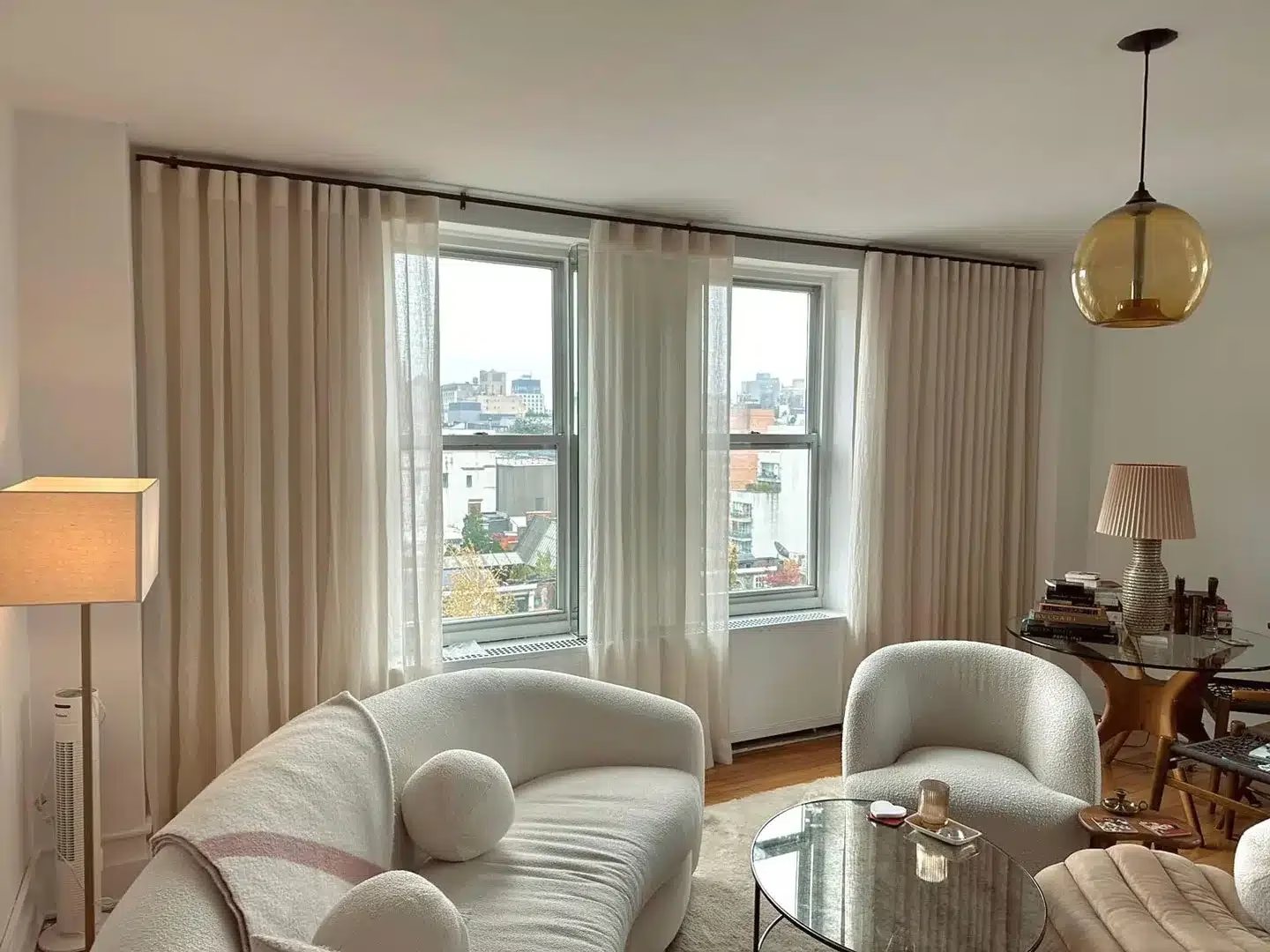
Curtains and Drapes
Curtains add softness to living rooms.
They can:
- frame the view
- add texture
- make ceilings appear taller
- soften large glass surfaces
Popular living-room choices include:
- ripple fold drapes
- pinch pleat curtains
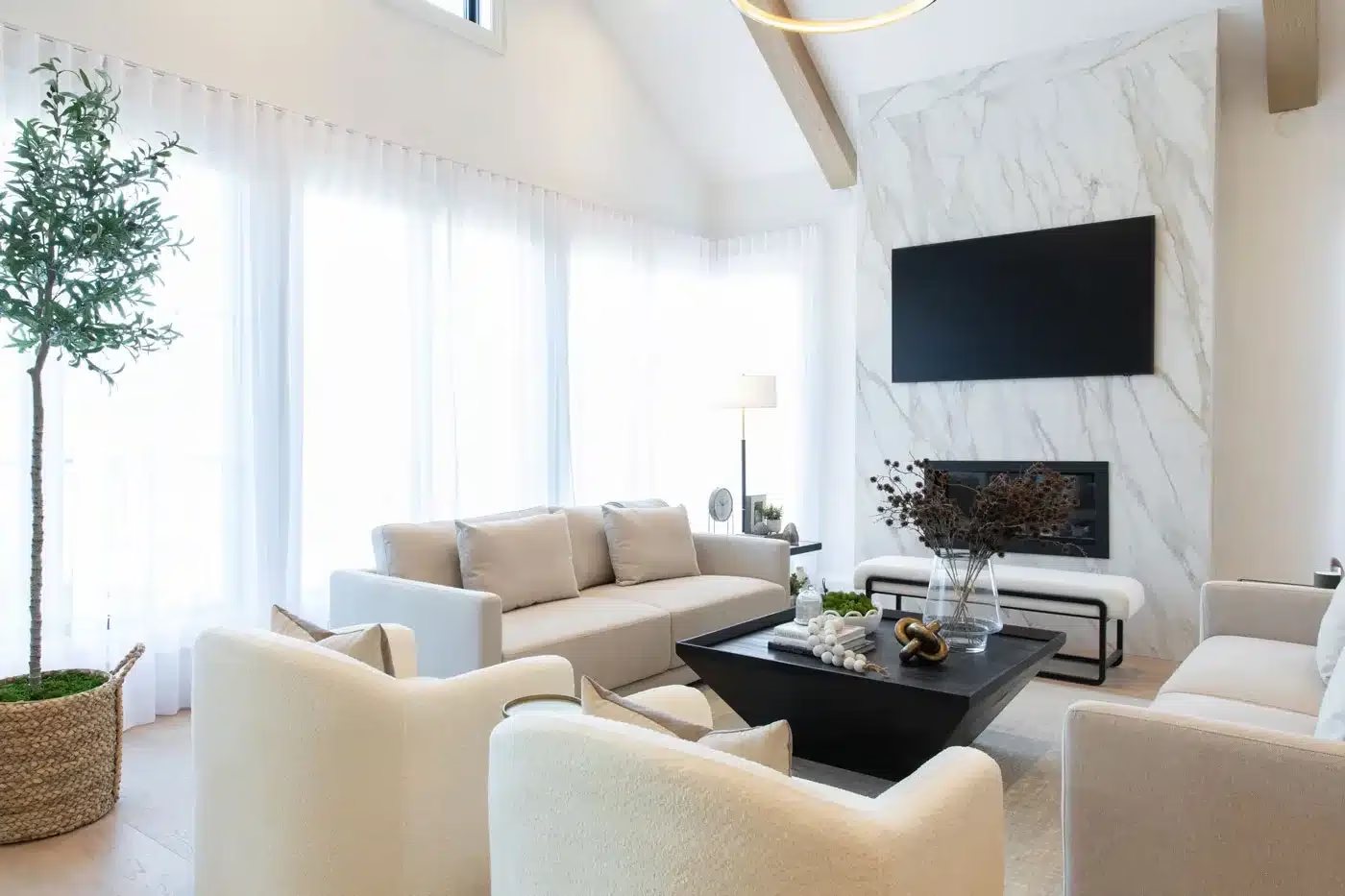
- sheer curtains
- layered curtains
Should Living-Room Curtains Be Sheer?
Sheer curtains can work extremely well where the goal is:
- natural light
- softness
- daytime privacy
They are particularly attractive across:
- large windows
- condo window walls
- sliding doors
However, sheers may provide limited privacy at night.
A second layer may be useful when evening privacy matters.
What Is Best for Privacy?
Privacy requirements depend on the property.
A living room facing another building may need more coverage than one facing a private backyard.
Options include:
Zebra Blinds
Provide adjustable privacy.
Light Filtering Shades
Obscure direct views while keeping the room bright.
Sheer Curtains
Useful during the day but may need another layer at night.
Curtains or Drapes
Provide stronger privacy when closed.
What Is Best for a Living Room With a TV?
Glare becomes more important when the television faces or sits near large windows.
Useful options include:
- solar shades
- zebra blinds
- room-darkening roller shades
The best choice depends on:
- TV position
- window orientation
- time of day the room is used
What About Large Windows?
Large living-room windows often work well with:
- roller shades
- solar shades
- motorized shades
- ripple fold curtains
For very wide windows, dividing the treatment into several sections may improve operation.
Are Motorized Treatments Worth It in a Living Room?
They can be.
Motorization becomes particularly useful when the living room has:
- several shades
- large windows
- hard-to-reach treatments
- frequently changing sunlight
Layering Window Treatments
Layering can provide excellent flexibility.
Examples include:
- solar shade + curtain
- roller shade + sheer curtain
- wood blind + decorative drape
One layer can handle practical light control while another contributes to the room’s design.

Which Living-Room Treatment Should You Choose?
Choose roller shades if you want:
- simplicity
- compact design
- many fabric options
Choose solar shades if:
- glare and strong sun are problems
- maintaining some view matters
Choose zebra blinds if:
- adjustable daytime privacy is important
Choose curtains if:
- softness and design impact are priorities
Final Thoughts
The best living-room window treatment should work with both the windows and the way the room is used.
Think first about:
- daylight
- privacy
- glare
- views
Then choose a style that complements the rest of the interior.