Best Window Treatments for Home Offices
Home-office window treatments have one especially important job: control glare without eliminating useful daylight.
Bright windows can create problems on:
- computer monitors
- video calls
- work surfaces
At the same time, a completely dark room is rarely ideal for working.
The goal is balance.
Solar Shades
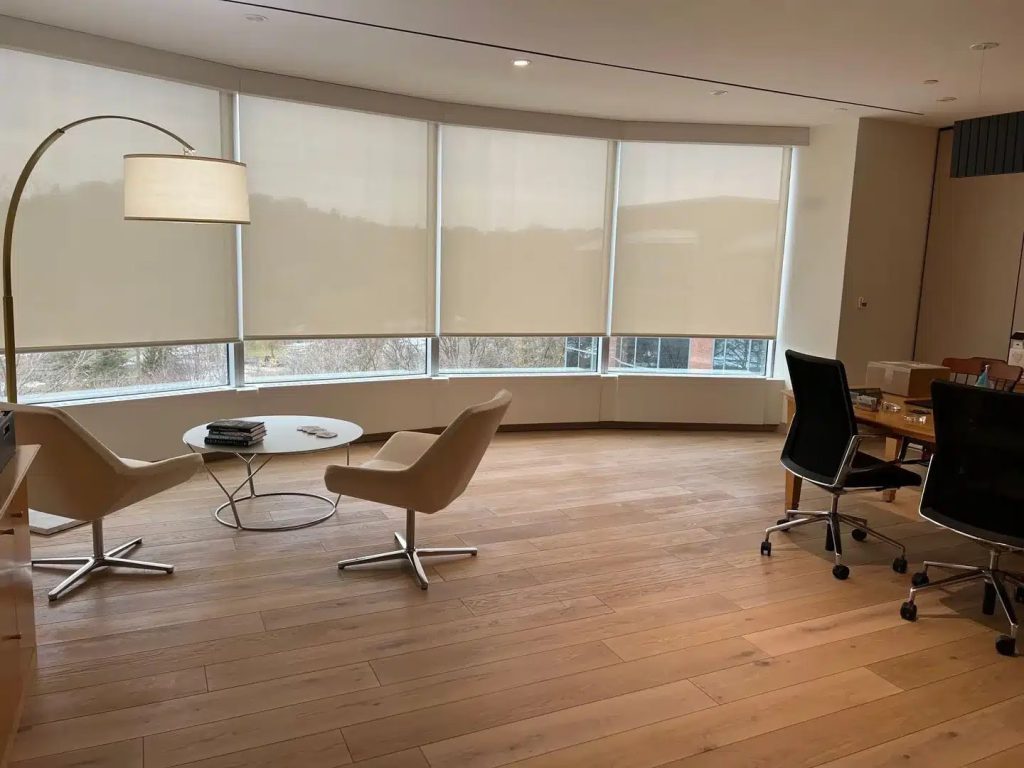
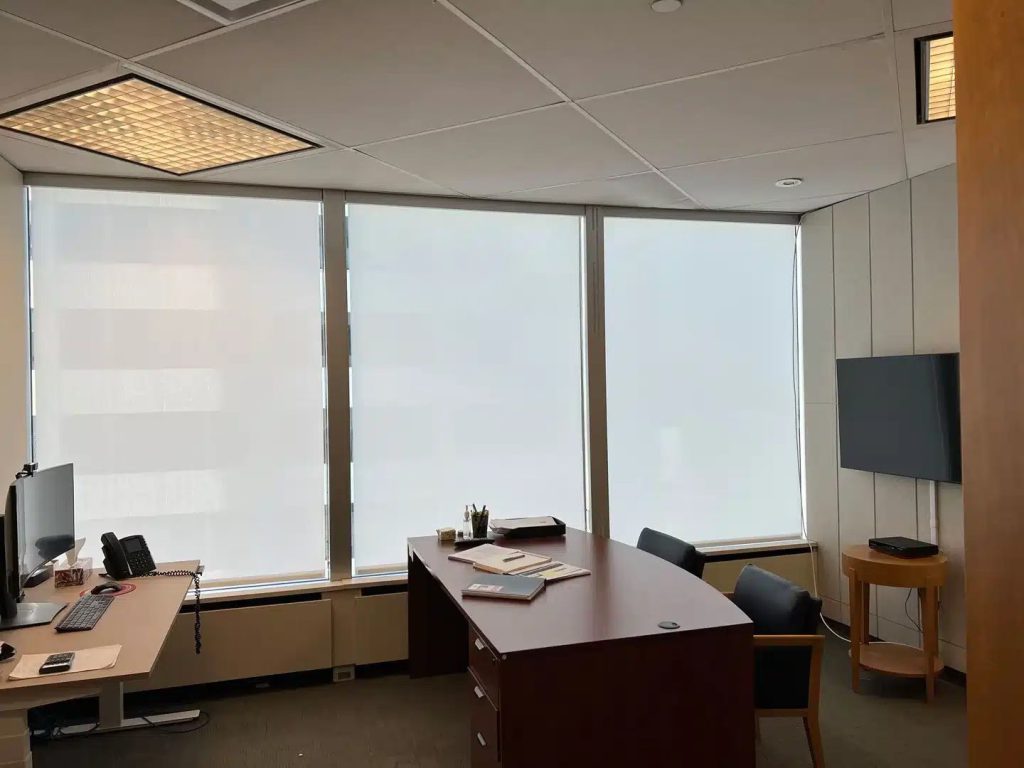
Solar shades are one of the best options for many home offices.
They can reduce glare, direct sunlight and solar exposure while preserving varying levels of outward visibility.
Roller Shades
Light-filtering roller shades can soften daylight.
They work well when:
- glare is moderate
- privacy matters
- maintaining a clean appearance is important
Roller shades are also easy to combine with motorization.
Zebra Blinds
Zebra blinds provide adjustable light control.
During the day, the sheer and opaque bands can be repositioned depending on:
- sun
- screen glare
- privacy
This can make them useful for rooms where conditions change frequently.

Wood or Faux Wood Blinds
Horizontal blinds provide very precise directional control.
You can tilt the slats to:
- redirect light
- reduce glare
- maintain some daylight
This flexibility can be very useful in offices.
Which Is Best for Computer Glare?
Solar shades are often the strongest option when direct sunlight is the main problem.
The ideal fabric openness depends on:
- window orientation
- brightness
- desired view
- monitor location
A tighter fabric may reduce more glare.
Which Is Best for Video Calls?
For video calls, avoid a very bright uncovered window directly behind you.
Window treatments can help balance exposure.
Good options include:
- solar shades
- light filtering shades
- zebra blinds
You may also need to reconsider desk position.
What Is Best for Privacy?
If the office faces a street, a neighbour or a condo tower, consider:
- zebra blinds
- light filtering shades
- wood/faux wood blinds
Highly open solar shades may provide limited nighttime privacy.
Should a Home Office Use Blackout Shades?
Usually not as the primary everyday treatment.
Blackout shades can be useful if the office doubles as a guest bedroom or media room, but most workspaces benefit from some natural daylight.
Are Motorized Shades Useful in an Office?
Yes, especially if:
- several shades are installed
- sunlight changes throughout the workday
- the window is behind a desk
- access is inconvenient
Schedules may also help manage predictable afternoon sun.
What About Temperature?
Large office windows can make the room uncomfortable during sunny periods.
Solar shades can reduce direct solar exposure.
Honeycomb shades may provide additional insulation but block the view when lowered.
Which Office Treatment Should You Choose?
Choose solar shades if:
- glare is the main problem
Choose zebra blinds if:
- adjustable daylight and privacy matter
Choose horizontal blinds if:
- directional light control is useful
Choose roller shades if:
- simplicity and clean design are priorities
Final Thoughts
A home office should remain bright enough to feel comfortable without creating excessive glare.
Start by identifying:
- where the sunlight comes from
- where your monitor sits
- when glare is worst
Then choose a treatment that allows you to control that light throughout the workday.