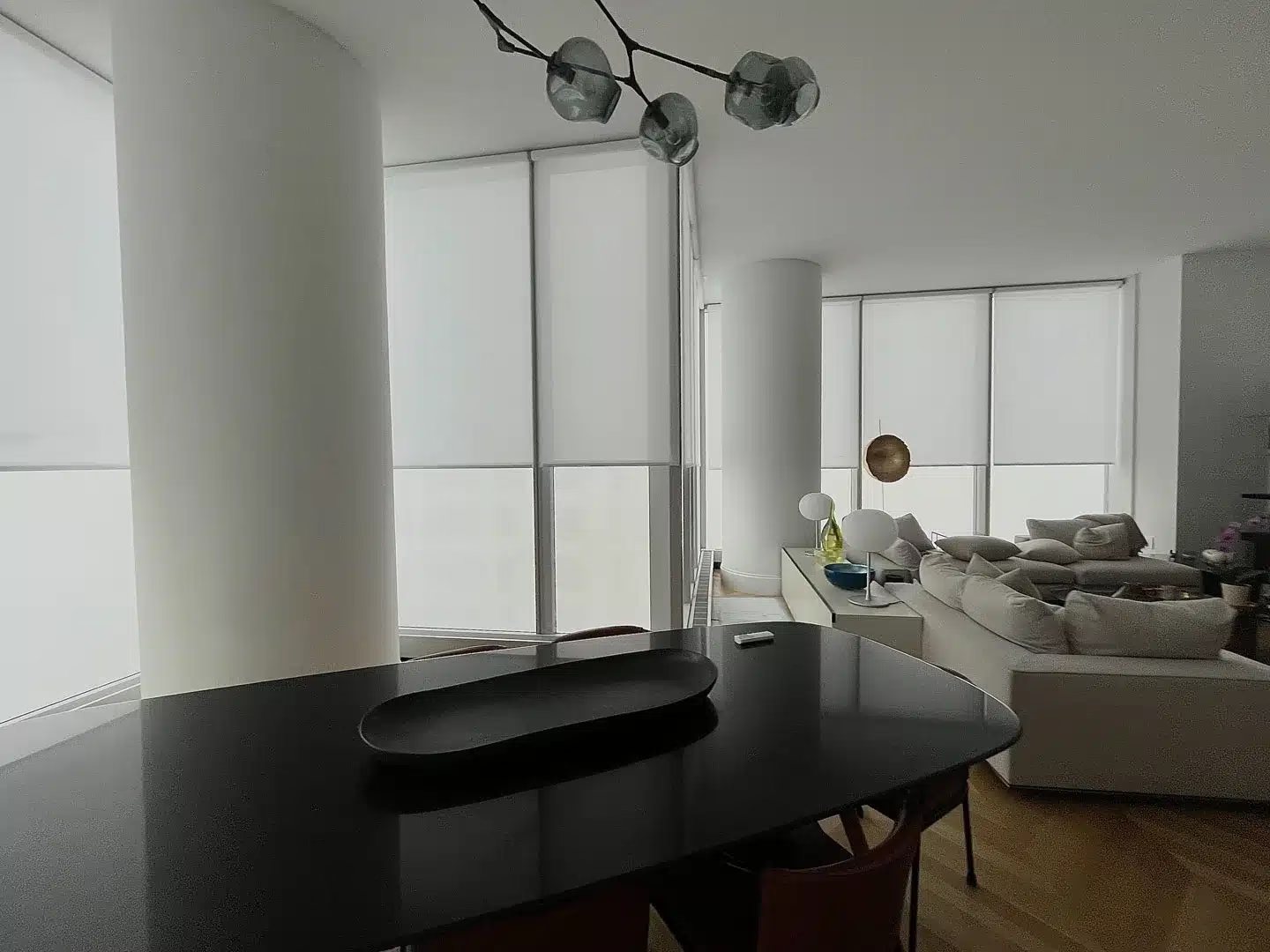
Battery vs. Hardwired Motorized Shades
Every motorized shade needs a source of power.
Two common approaches are:
- battery power
- hardwired power
Both can operate the same basic type of window treatment.
The difference is how electricity reaches the motor.
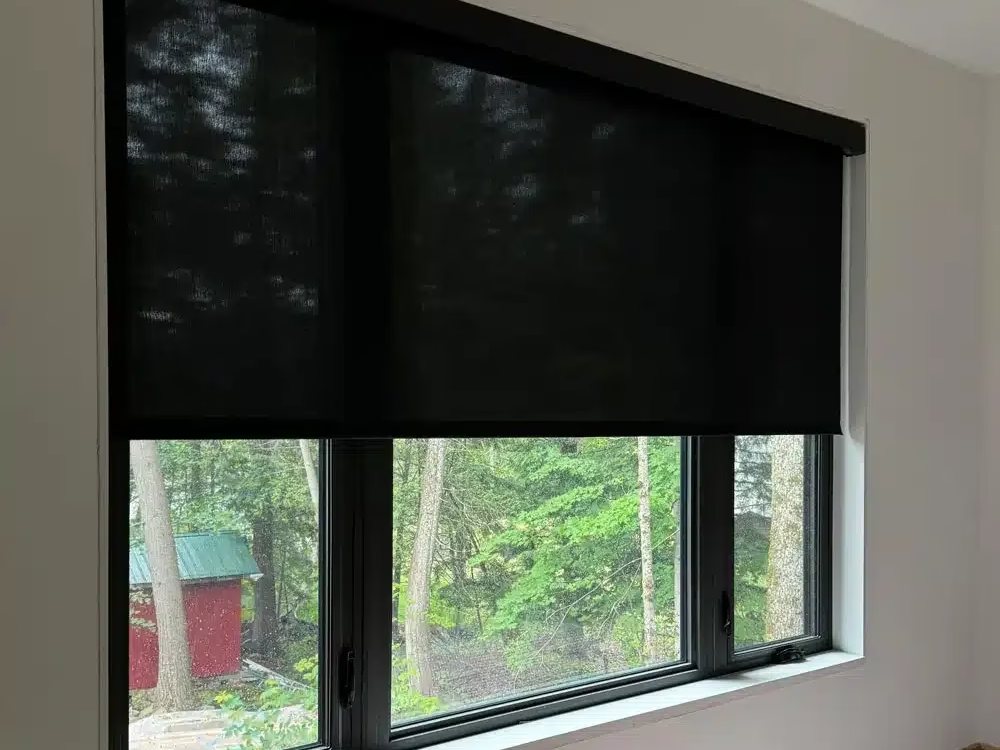
What Are Battery-Powered Motorized Shades?
Battery-powered shades contain or connect to a battery pack.
Depending on the product, batteries may be:
- rechargeable
- replaceable
Because permanent electrical wiring is not always required, battery shades can simplify installation.
What Are Hardwired Motorized Shades?
Hardwired shades receive power from wiring installed in the building.
Depending on the system, this may involve:
- low-voltage power
- dedicated power supplies
- concealed wiring
The exact electrical requirements vary by manufacturer.
Hardwired systems are often considered during:
- renovations
- new construction
- major window-treatment projects
Battery vs. Hardwired: Key Differences
| Feature | Battery | Hardwired |
|---|---|---|
| Electrical Wiring | Usually not required at window | Required |
| Installation | Simpler retrofit | Easier during construction/renovation |
| Charging/Replacement | Periodic | Usually none at motor |
| Appearance | Can be very clean but battery access needed | Very clean with concealed wiring |
| Large Projects | Practical | Excellent |
| Existing Homes | Excellent | May require additional work |
| New Construction | Good | Excellent opportunity |
| Maintenance | Battery charging/replacement | Minimal power maintenance |
| Power Outage | May continue while battery has charge | Usually unavailable without backup power |
Advantages of Battery-Powered Shades
Easier Retrofit
Battery systems are attractive for existing homes because they usually avoid opening walls to install electrical wiring.
Flexible Placement
They can often be installed in locations where electrical power was never planned.
Suitable for Condos
In condos, running new wiring may be more difficult because of:
- concrete
- building rules
- finished walls
- restricted electrical work
Battery systems can simplify the project.
Disadvantages of Battery Power
The main disadvantage is maintenance.
Eventually batteries must be recharged or replaced.
The frequency varies based on the actual product and usage.
Advantages of Hardwired Shades
Continuous Power
There is no normal battery-charging routine.
Excellent for Many Windows
For a large whole-home project, permanent power can simplify long-term operation.
Clean Integration
When planned during construction or renovation, wiring can be completely concealed.
Disadvantages of Hardwired Systems
Installation may require:
- electrical planning
- wiring
- access to walls or ceilings
- coordination with other trades
This can make hardwiring less attractive in a finished home.
Which Is Better for New Construction?
Hardwired motorization is worth considering during construction or a major renovation.
It is much easier to install wiring before drywall, ceilings and finishes are complete.
Even if the homeowner has not selected the final shades yet, planning power locations in advance may provide more flexibility later.
Which Is Better for Existing Homes?
Battery-powered shades are often easier.
They can provide motorization without significant electrical work.
Which Is Better for Condos?
Battery power is often particularly practical for condo retrofits.
However, a condo under construction or undergoing a major renovation may also be able to accommodate concealed wiring.
Always confirm building requirements before electrical work.
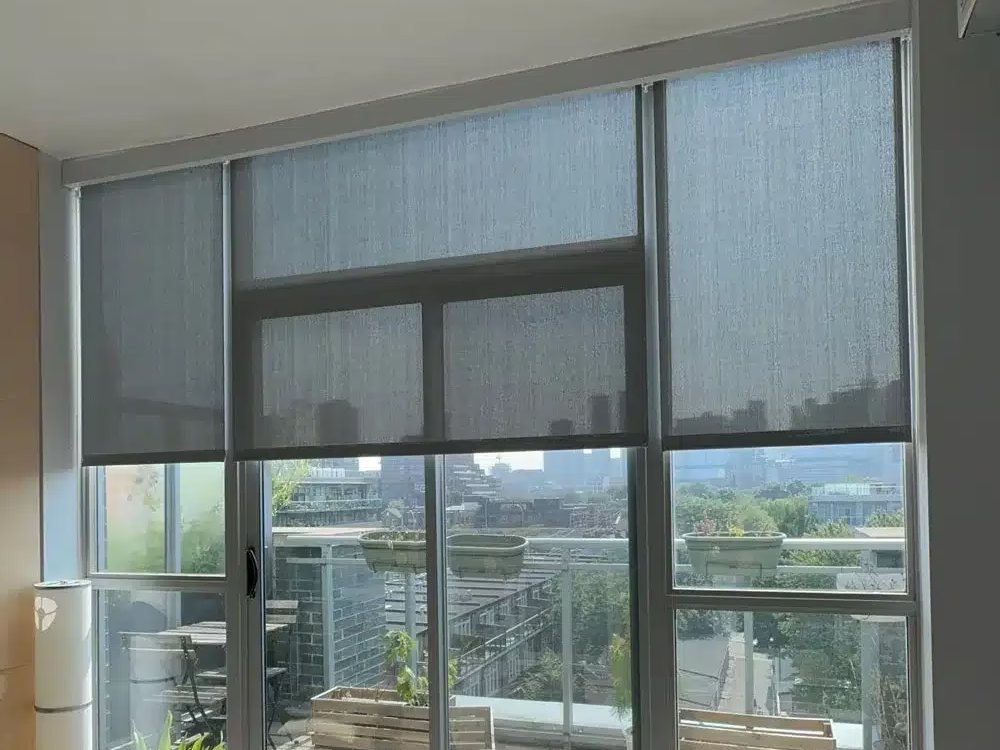
How Often Do Batteries Need Charging?
There is no universal interval.
Battery life depends on:
- shade size
- shade weight
- motor
- battery capacity
- frequency of operation
- connectivity
Use the manufacturer’s specifications for the actual system.
Is Solar Charging an Option?
Some manufacturers may offer compatible solar-charging accessories for certain motors.
Availability depends on:
- product
- window exposure
- manufacturer
Do not assume solar charging is available for every system.
Which Should You Choose?
Choose battery-powered shades when:
- the home is already finished
- avoiding wiring is important
- the project is relatively small
- easier retrofit installation is desired
Choose hardwired shades when:
- building or renovating
- many windows are being motorized
- concealed power is easy to install
- you want to avoid battery maintenance
Final Thoughts
Neither power system is automatically better.
Battery shades make motorization much easier to retrofit.
Hardwired shades provide a very clean long-term solution when power can be planned in advance.
The best time to consider hardwiring is before walls and ceilings are finished.